
I live and work
on the land of
the Wahzhazhe
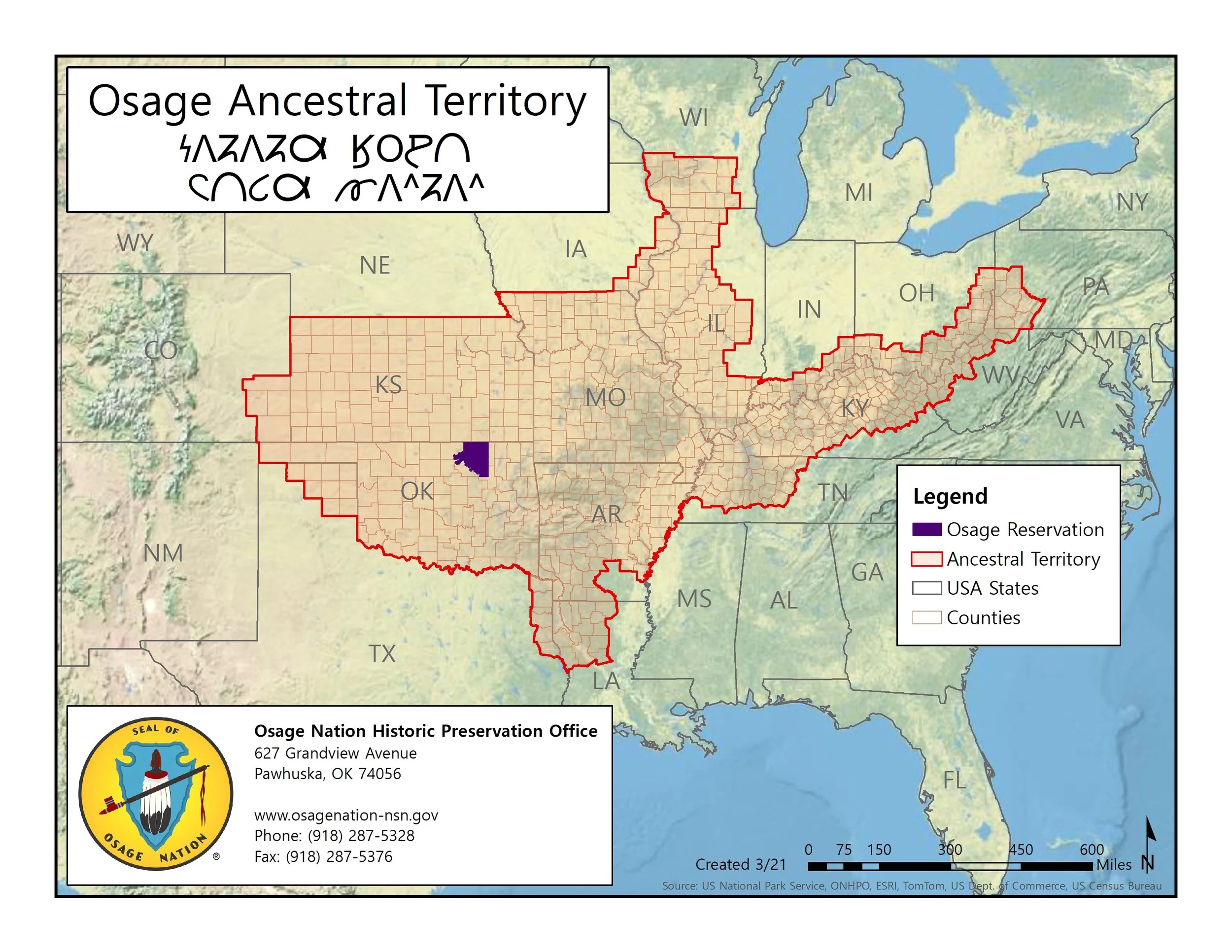
The Wahzhazhe (water people) are now known as the Osage Nation.
a message from osage nation:
“The Osage Nation encourages you to visit our Historic Preservation webpage to learn more about our history and visit the K-12 Lessons page to learn about the Osage people.
The Osage Nation is currently engaged in the protection and preservation of one of our ancestral mounds, Sugarloaf Mound in south St. Louis. The Nation accepts donations to help support our effort to preserve one of the last remaining mounds in the St. Louis area by specifying Sugarloaf Mound support when donating to the Osage Foundation.
We welcome you to visit the Osage Nation headquarters on our reservation in Pawhuska, Oklahoma. The Osage Nation respectfully requests that you honor our land, thank you."
Sugarloaf mound
“As the oldest human-made structure in St. Louis and the last Native American Mound in what was once known as "Mound City," Sugarloaf Mound links the present with the past. Sugarloaf is likely a Woodland period burial mound or a Mississippian platform mound, and dates to a time when the region was home to thriving and highly advanced Native American cultures long before the arrival of European and African people.
When the French began construction of what would become St. Louis in 1764, the future city contained possibly hundreds of mounds. While many were relatively small burial mounds situated on the bluffs overlooking navigable waterways, there was also a major Mississippian civic-ceremonial complex located just north of the Gateway Arch. The North St. Louis Mound Group included over 25 mounds systematically arranged around public plazas. This substantial site was presumably tied to two other nearby Mississippian centers: the little-known East St. Louis Mound Group and its famous relative, Cahokia (a UNESCO World Heritage Site).”
-Excerpts from “Saving Sugarloaf Mound” by Andrew B. Weil and Dr. Andrea Hunter, in CRM: The Journal of Heritage Stewardship, Volume 7 (1), 2010.
the importance of Land Acknowledgment
The process of knowing and acknowledging the land we stand on is a way of honoring and expressing gratitude for the ancestral Osage people who were on this land before us. Learn more about the Osage Nation by clicking the button below.